The Ultimate Guide to Destin: The Jewel of the Emerald Coast
If there is a stretch of coastline in the United States that genuinely rivals the crystalline waters of the Caribbean, it is the Florida Panhandle. Anchoring this spectacular region is Destin, a once-sleepy fishing village that has exploded into one of the most beloved beach destinations in the country. Known affectionately as the "World's Luckiest Fishing Village," Destin pairs world-class angling with a vibrant harbor culture and a breathtaking natural aesthetic that you have to see to believe.
Welcome to the ultimate travel guide to Destin, Florida. From the unique geological origins of its blindingly white sand to navigating the legendary Crab Island, this comprehensive guide will help you plan the perfect Emerald Coast escape.
Why It’s Worth Knowing About
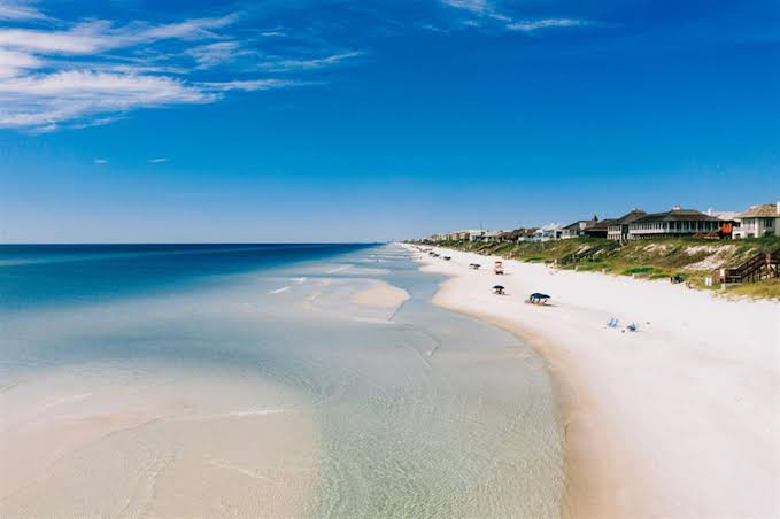
Destin's claim to fame lies where the land meets the sea. The region is famously known as the "Emerald Coast," a title earned thanks to the startling contrast between its brilliant white shores and vivid, jewel-toned waters.
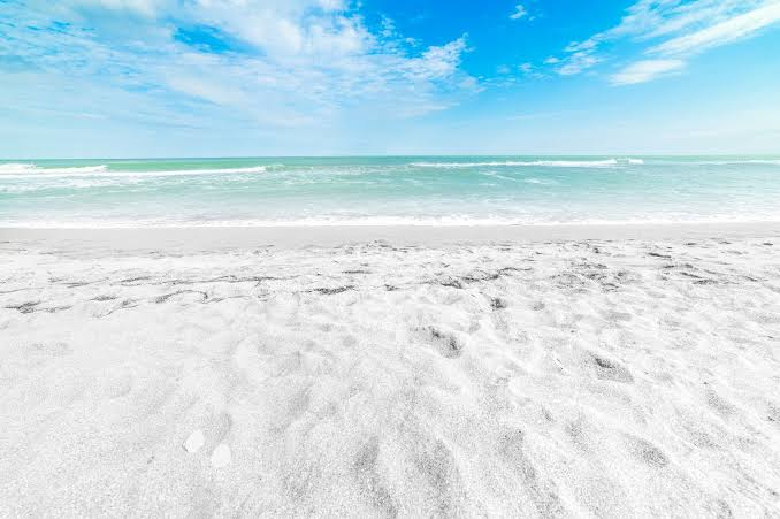
Much like its Gulf Coast neighbor to the south, Siesta Key, Destin’s incredible shoreline is the result of ancient geological forces. The sand here is composed of nearly pure, finely ground quartz crystals. At the end of the last Ice Age, around 20,000 years ago, warming temperatures caused massive glacial meltwater to flow southward. The mighty Apalachicola River carried this quartz sediment down from the southern Appalachian Mountains, eventually depositing it into the Gulf of Mexico.
Over thousands of years, tidal currents distributed this quartz westward along the panhandle to form the beaches of Destin. Because quartz is highly reflective and doesn't absorb the sun's heat, the sand remains incredibly cool to the touch even in the blistering mid-summer heat. It is so fine that it squeaks under your bare feet like freshly fallen snow.
The mesmerizing emerald color of the water is the second half of this natural equation. The pure white quartz sand extends out into the Gulf along the seafloor, acting as a massive underwater reflector. When natural sunlight hits this bright white bottom and filters back up through the natural micro-algae in the clear Gulf water, it produces that signature, glowing emerald-green hue.
Water Data: Temperature & Clarity
The Gulf of Mexico dictates the rhythm of life in Destin. Understanding the seasonal shifts in water temperature will help you pack accordingly and plan the right activities.
Water Temperatures by Season
Destin experiences more pronounced seasonal shifts than South Florida, meaning the water temperatures fluctuate significantly throughout the year. Here is what to expect based on historical averages:
Season
Avg. Water Temp
How it Feels
Winter (Dec - Feb)
58°F - 65°F
Very chilly. Strictly wetsuit territory for surfers or divers.
Spring (Mar - May)
68°F - 78°F
Refreshing and energizing. By May, the water reaches the mid-70s and is perfect for swimming.
Summer (Jun - Aug)
79°F - 86°F
Bath-water warm. Ideal for marathon snorkeling sessions, floating, and all water sports.
Fall (Sep - Nov)
66°F - 83°F
September and October are the sweet spots, holding onto summer heat before rapidly cooling in November.
Water Clarity
Destin boasts some of the clearest water in the continental United States, but it is not a stagnant swimming pool. The clarity is best during high tide, when the incoming currents bring clean, filtered Gulf water directly to the shore. Sandbars just offshore help keep the waves gentle, which prevents the powdery sand from churning up. However, consecutive days of heavy southern winds or tropical storm systems can temporarily stir up the surf, trading the glassy emerald look for a cloudier, deeper blue-green.
Marine Life
The intersection of the Choctawhatchee Bay and the Gulf of Mexico makes Destin a thriving, nutrient-rich environment for a massive variety of marine life.
Bottlenose Dolphins
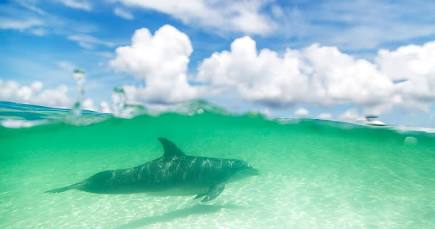
Dolphins are the undisputed local celebrities of the Emerald Coast. They are highly active year-round and can frequently be seen surfing the wakes of charter boats, hunting in the passes, or simply cruising parallel to the beach just past the second sandbar. Booking a sunset dolphin cruise is almost a mandatory Destin experience, as pods are famously playful and curious around boats in this area.
Bottlenose dolphins are abundant in Destin. Source: Ocean Reef Resorts
Sea Turtles
Like much of the Gulf Coast, Destin's dark, sandy shores are critical nesting habitats for endangered sea turtles, primarily Loggerheads and Green Sea Turtles. Nesting season runs from May through October. If you are walking the beach at dawn, you might spot the distinctive tractor-like tracks of a mother turtle who came ashore overnight.
Stingrays & Skates
In the shallow, sandy shallows, it is common to spot southern stingrays gliding elegantly along the bottom. Because they love to bury themselves in the sand to hide from predators, locals and frequent visitors know to do the "stingray shuffle"—sliding your feet through the sand rather than taking heavy steps—when entering the water to alert the rays and encourage them to swim away.
The Fishery (Snapper, Grouper, & Tarpon)
Destin isn't called the "World's Luckiest Fishing Village" for nothing. The city boasts the largest commercial and charter fishing fleet in the state of Florida. The secret is the "100-Fathom Curve"—a steep drop-off in the ocean floor that sits closer to Destin than any other spot in the Gulf. This proximity allows anglers to reach deep-water species like Red Snapper, Gag Grouper, Amberjack, and even Sailfish and Marlin without an exhausting boat ride.
Best Time to Go
Destin has distinct seasons, each catering to a completely different type of traveler. Timing your trip is the most crucial decision you will make.
The Ultimate Sweet Spots (October & May): Ask any local or seasoned rental host, and they will point you to October. The water temperature is still a swimmable 73°F to 78°F, the oppressive summer humidity has vanished, and the summer crowds have gone home. May is the runner-up, offering a fantastic balance of warming Gulf waters (mid-70s) and gorgeous spring weather before the massive June influx.
Peak Summer (June to August): This is when Destin comes alive. It is the undisputed champion for family summer vacations. The water peaks at a balmy 86°F in August, Crab Island is a massive daily party, and the Harborwalk is packed with energy. The trade-offs are premium rental prices, heavy traffic on Highway 98, and intense mid-day heat.
The "Secret" Month (September): For adults and couples without school-schedule constraints, September is incredible. The water remains above 80°F, but the beaches empty out dramatically after Labor Day.
Snowbird Season (January to February): If you want to escape winter up north, Destin offers incredible value during these months. The water (58°F to 65°F) is too cold for swimming, but the air is mild and crisp. Monthly rental rates plummet, there are no wait times at top-tier restaurants, and the beach is yours for long, peaceful walks.
Getting There, Getting Around, & Where to Stay
Getting There
Flying into the Emerald Coast has never been easier.
Destin-Fort Walton Beach Airport (VPS): This is the closest and most convenient airport, located just 20-30 minutes from central Destin. It has seen a massive surge in direct flights via carriers like Allegiant, Southwest, and Delta.
Northwest Florida Beaches International Airport (ECP): Located about an hour east in Panama City Beach, this is an excellent backup option that frequently offers competitive fares.
Pensacola International Airport (PNS): About 90 minutes to the west, offering another major hub for domestic flights.
Getting Around
Unlike smaller, walkable barrier islands, Destin is sprawling. Highway 98 is the main artery that runs parallel to the coast, connecting the harbor in the west to Miramar Beach in the east.
Renting a Car: Generally highly recommended if you plan to explore different beaches, state parks, and restaurants. Be prepared for slow-moving traffic during the peak summer months.
Water Taxis: If you are staying on Holiday Isle or near the harbor, the Destin Water Taxi is a brilliant way to skip the Highway 98 traffic and cross the harbor directly to restaurants and bars.
Where to Stay
Holiday Isle: A three-mile peninsula flanked by the Gulf on one side and the Destin Harbor on the other. It is primarily residential condos and homes, offering a quieter beach experience while remaining just a water taxi ride away from the bustling Harborwalk.
Crystal Beach: Known for its charming, pastel-colored beach cottages and white picket fences. It has a nostalgic, neighborhood feel and is highly walkable, with plenty of local cafes and beach accesses.
Miramar Beach / Sandestin: Located just east of Destin proper, this area is home to massive, sprawling resorts (like the Sandestin Golf and Beach Resort). If you want an all-inclusive feel where you can navigate entirely by golf cart to private beaches, golf courses, and shopping villages, this is your spot.
Things To Do
Destin is an action-packed destination. Whether you want high-octane water sports or a serene nature walk, the itinerary options are endless.
Drop Anchor at Crab Island
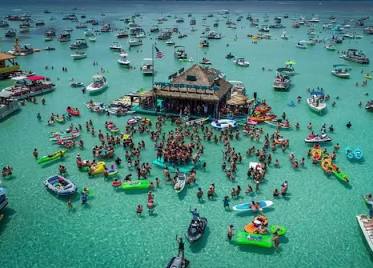
You simply cannot visit Destin without experiencing Crab Island. Despite the name, it is not an island; it is a submerged sandbar located just inside the Destin Pass. At high tide, the water is a crystal-clear, waist-deep turquoise.
The legendary boat gathering at Crab Island. Source: Destin Vacation Boat Rentals
Hundreds of boats drop anchor here daily during the summer. It is a massive, floating tailgate party complete with floating restaurants, mobile ice cream boats, and giant inflatable water parks. You have to rent a pontoon boat or book an excursion to get there, as swimming across the pass is incredibly dangerous due to strong tidal currents.
Explore HarborWalk Village
The Destin Harbor is the heartbeat of the city's nightlife and dining. HarborWalk Village sits at the edge of the water and is packed with waterfront seafood restaurants, zip-lines, boutique shops, and live music venues. It is also the perfect place to grab a cocktail and watch the massive charter fishing fleet return to the docks around 4:00 PM to weigh their daily catch.
Wander Henderson Beach State Park
If you want to experience the Emerald Coast as it looked before the high-rise condos moved in, visit Henderson Beach State Park. This protected stretch of shoreline features pristine, 30-foot-tall white sand dunes anchored by blooming sea oats. It offers a quiet, natural beach day with excellent facilities, nature trails, and campsites.
Book a Deep-Sea Fishing Charter
Embrace the city's heritage and get out on the water. Whether you are an experienced angler or a complete novice, Destin’s fleet caters to everyone. You can book a relatively cheap half-day "party boat" for bottom fishing, or charter a private sportfishing yacht for an all-day offshore adventure hunting for Mahi-Mahi, Wahoo, and Sailfish.
Take in the Famous Sunsets
End your day facing west.
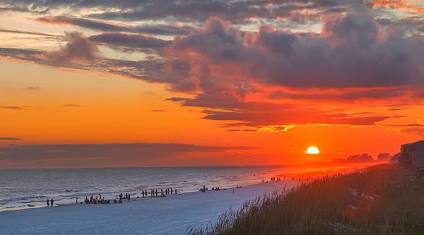
Because of the angle of the panhandle, Destin offers incredible sunsets that reflect magnificently off the calm harbor waters and the Gulf. Whether you are taking an evening stroll down the beach, enjoying a sunset dolphin cruise, or sipping a drink on the deck of a harbor restaurant, the daily light show is the perfect capstone to an Emerald Coast vacation.
Sunset views over the Emerald Coast. Source: Ocean Reef Resorts
The Ultimate Guide to Siesta Key: Florida’s Powder-White Paradise
There are beaches, and then there is Siesta Key. Tucked away on Florida’s Gulf Coast, just a short drive from downtown Sarasota, this eight-mile-long barrier island is a masterclass in coastal perfection. If you are seeking the quintessential Florida beach vacation—one that pairs laid-back island vibes with natural wonders that defy logic—you have found your destination.
Welcome to the ultimate travel guide to Siesta Key, Florida. Whether you are a first-time visitor or a returning sun-seeker, this comprehensive guide covers everything from the fascinating geology of its famous sand to the best local spots for a sunset cocktail.
Why It’s Worth Knowing About
Siesta Key is not just another pretty beach; it is a geological marvel that has consistently claimed the title of the #1 Beach in the United States by Dr. Beach and TripAdvisor.
The secret to its fame lies entirely underfoot. Most beaches around the world are composed of a chaotic mix of pulverized coral, crushed shells, and various sediment. Siesta Beach, however, is covered in sand that is 99% pure quartz crystal.
According to geologists at Harvard University, this sand is millions of years old. Its journey began in the southern Appalachian Mountains. Over millions of years, as the mountains eroded, massive river systems carried the sediment southward. Along the way, weaker minerals like feldspar and mica broke down and washed away, leaving only the incredibly durable, chemical-resistant quartz to be deposited on the shores of Siesta Key.
The result is sand that feels like confectioner's sugar. It squeaks faintly when you walk on it, and it packs so well that it is a favorite medium for world-class sand sculptors. Most importantly, because quartz is a highly efficient heat conductor and highly reflective, the sand on Siesta Key never burns your feet. Even on a sweltering 95-degree August afternoon, the powdery white shore feels remarkably cool to the touch.
Beyond the sand, the island offers an intoxicating blend of Old Florida charm, vibrant nightlife, and a welcoming, flip-flop-friendly atmosphere that makes it universally appealing to families, couples, and solo adventurers alike.
Water Data: Temperature & Clarity
The waters surrounding Siesta Key are part of the Gulf of Mexico, known for being calmer, warmer, and generally more inviting than the Atlantic side of the state.
Water Temperatures by Season
Whether you want a refreshing dip or a bath-like float, timing your trip is key. Here is a breakdown of what to expect from the Gulf waters throughout the year based on historical data:
Season
Avg. Water Temp
How it Feels
Winter (Dec - Feb)
64°F - 68°F
Brisk and chilly. Best for wading or quick, refreshing dips.
Spring (Mar - May)
70°F - 81°F
Transitioning from cool to perfect. By April, it is comfortable for long swims.
Summer (Jun - Aug)
83°F - 88°F
Bath-like and incredibly warm. Ideal for hours of floating and snorkeling.
Fall (Sep - Nov)
73°F - 86°F
September remains very warm, while October and November offer a comfortable, cooling sweet spot.
Water Clarity
On most days, the water at Siesta Key is a striking, shimmering turquoise that easily rivals the Caribbean. However, the Gulf is a dynamic environment, and clarity can fluctuate based on a few natural factors:
Tides: Incoming (high) tides pull clean, filtered ocean water toward the shore, resulting in the clearest and most vibrant turquoise hues.
Wind: Strong winds can churn up the sandy bottom along the shoreline, temporarily clouding the water.
Rainfall: During the summer wet season, heavy afternoon rainfalls (affectionately called "Liquid Sunshine") can lead to mainland runoff, which occasionally clouds the coastal waters with silt.
Marine Life
The calm, nutrient-rich waters of the Gulf of Mexico make Siesta Key a vibrant hub for marine biodiversity. Whether you are walking the shoreline, paddleboarding through the mangroves, or snorkeling offshore, wildlife encounters are a daily occurrence.
Manatees (The Gentle Giants)
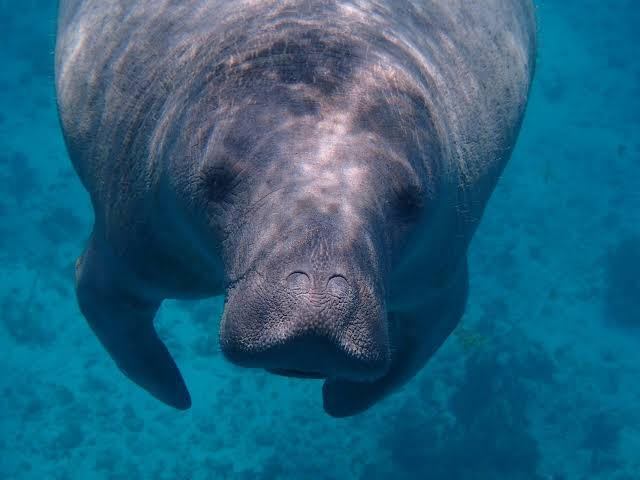
Florida’s beloved West Indian manatees are a common sight around Siesta Key, particularly in the warmer months and in the calm, shallow waters of the Intracoastal Waterway and local bays. These slow-moving herbivores graze on seagrass beds and frequently surface for air. If you are kayaking or paddleboarding, they will often glide peacefully right beneath your board. Remember, it is illegal to touch or harass them, so admire these gentle "sea cows" from a respectful distance.
The gentle Florida manatee. Source: Gertrude Rentals
Bottlenose Dolphins
You don’t need to book a boat tour to see dolphins in Siesta Key—though taking one is highly recommended! Bottlenose dolphins are incredibly active right off the beaches. It is a daily spectacle to see pods of dolphins breaking the surface, playing in the wakes of passing boats, or hunting schools of mullet just fifty yards from the shoreline.
Sea Turtles
From May through October, Siesta Key becomes a vital nesting ground for loggerhead and green sea turtles. Female turtles come ashore at night to lay their eggs in the soft quartz sand. If you visit during the summer, you will see roped-off nests dotting the beach. The island enforces strict "lights out" rules for beachfront properties during this time, as artificial light can disorient hatchlings trying to find the sea.
Point of Rocks
Located at the southern end of Crescent Beach, the "Point of Rocks" is a unique limestone rock formation that serves as the island's premier snorkeling spot. Here, the sandy bottom gives way to shallow coastal reefs teeming with life. Snorkelers can expect to see schools of snook, colorful wrasse, sheepshead, crabs, and the occasional small nurse shark or stingray gliding along the sandy perimeter.
Best Time to Go
Choosing the best time to visit Siesta Key depends entirely on what you prioritize: perfect weather, warm water, or avoiding the crowds.
The Sweet Spots (April to May & October to November): This is arguably the best time to visit. The intense heat of the summer has either yet to arrive or has finally broken. Daytime air temperatures hover in the low to mid-80s, the humidity is manageable, and the Gulf water is in that "goldilocks" zone—warm enough to swim in for hours, but refreshing enough to cool you down. Crowds are also thinner than during the peak winter months.
Peak Season / Snowbird Season (January to March): If you are fleeing freezing northern temperatures, Siesta Key is a paradise. Expect brilliant sunshine, low humidity, and high temperatures in the low-to-mid 70s. However, this is peak tourist season. Accommodation prices are at their highest, traffic can be heavy, and the water is generally too brisk for prolonged swimming.
Summer (June to August): Summer in Florida is hot, highly humid, and prone to brief, spectacular afternoon thunderstorms. However, if you are a true beach bum who loves bath-water ocean temperatures (often hitting 88°F) and you don't mind sweating, summer is fantastic. It is also the best time of year for water sports, as the Gulf is often flat and glass-like.
Getting There, Getting Around, & Where to Stay
Getting There
Siesta Key is incredibly accessible. The most convenient gateway is Sarasota-Bradenton International Airport (SRQ), which is a mere 10 to 15-mile drive from the island. SRQ has expanded massively in recent years and offers direct flights from dozens of major US cities. Alternatively, Tampa International Airport (TPA) is about an hour and fifteen minutes north and offers a massive array of domestic and international flights.
Getting Around
Once you are on the island, you really don't need a car. In fact, ditching the rental car will save you the headache of finding parking during peak season.
The Siesta Key Breeze Trolley: This is the best transportation hack on the island. It is a completely free open-air trolley that runs the length of the island from Siesta Key Village down to Turtle Beach, seven days a week.
Bikes & Golf Carts: Siesta Key is flat and incredibly bike-friendly. Numerous rental shops offer daily or weekly rentals for bicycles and street-legal golf carts.
Free Rides: Several local shuttle services (like Jonny's Free Ride) operate on a tips-only basis, picking you up and dropping you off anywhere on the key.
Where to Stay
Siesta Key is divided into a few distinct areas, each offering a different vibe:
Siesta Key Village (North Key): This is the beating heart of the island. If you want to be within walking distance of bustling seafood restaurants, lively bars with live music, coffee shops, and boutiques, stay near the Village.
Mid-Key (Crescent Beach area): South of the public beach, the island narrows. This area is packed with mid-rise beachfront condos and resorts. It offers a slightly quieter beach experience while still being a short trolley ride away from the Village.
South Key (Turtle Beach area): The sand changes here—it becomes a bit darker, coarser, and richer in shells, making it great for beachcombing. South Key is serene, residential, and deeply relaxed. It is perfect for those who want to escape the crowds entirely, kayak the mangroves, and listen to the waves in peace.
Things To Do
While doing absolutely nothing on the beach is highly encouraged, Siesta Key offers plenty of activities to fill your itinerary.
Lounge on Siesta Beach
You didn't travel all this way not to enjoy the main attraction. Rent a cabana or bring a beach chair, pack a cooler, and spend the day on the expansive, blindingly white sand. The main public beach features excellent amenities, including a large pavilion, concession stands, tennis and volleyball courts, and lifeguard stations. Because the beach is incredibly wide, the city has installed walking mats to help visitors easily navigate across the soft sand to the water's edge.
Experience the Sunday Drum Circle
This is a Siesta Key institution. Every Sunday, about an hour before sunset, locals, tourists, musicians, and dancers gather on the main public beach for a hypnotic, bohemian drum circle. The rhythmic beats build in intensity as the sun dips lower, culminating in a massive, joyful celebration of the sunset. It is free, family-friendly, and a cultural must-do.
[IMAGE: A vibrant crowd gathering on the white sand during golden hour for the Sunday drum circle]
Explore Siesta Key Village
Take a break from the sun and stroll down Ocean Boulevard in the Village. Grab a frozen daiquiri at the legendary Daiquiri Deck, enjoy fresh Gulf oysters at the Siesta Key Oyster Bar (SKOB) while pinning a dollar bill to the wall, or browse the colorful surf shops and boutiques.
Snorkel Point of Rocks
Grab your mask and fins and head to the southern tip of Crescent Beach. The Point of Rocks is the only natural rock formation on the Gulf Coast of Florida. Because the water is shallow (rarely deeper than 5 to 6 feet), it is incredibly accessible for snorkelers of all skill levels.
Kayak the Jim Neville Marine Preserve
Located near Turtle Beach at the southern end of the key, this 35-acre preserve is a maze of mangrove islands and shallow grass flats. Rent a kayak or paddleboard and navigate the quiet, winding water trails. It is one of the best places on the island to spot manatees, dolphins, and exotic coastal birds like roseate spoonbills, great blue herons, and ospreys.
Watch the Sunset
On the Gulf Coast, watching the sunset isn't just an activity; it is a daily ritual.
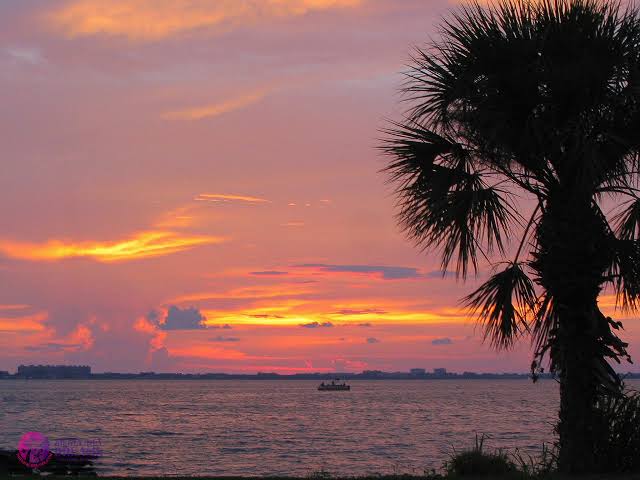
Because Siesta Key faces west, it offers uninterrupted, panoramic views of the sun melting into the horizon. The sky frequently explodes into vivid shades of cotton-candy pink, deep violet, and fiery orange. Grab a blanket, find a spot on the cool quartz sand, and wait for the "green flash"—the perfect end to a perfect Florida day.
A legendary Siesta Key sunset. Source: Siesta Key Dreams