The Underwater Metropolis — How Coral Reefs Power the Planet (and How to Visit Responsibly)
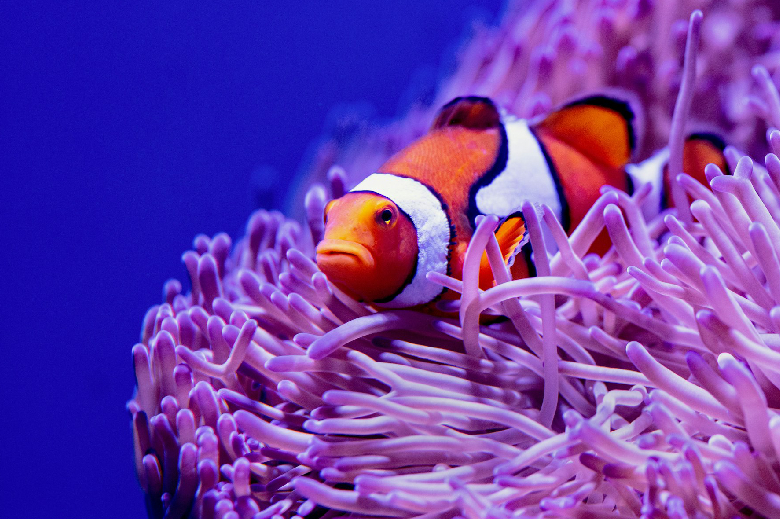
When you look down at a coral reef from a snorkeling mask, you might easily mistake it for a vibrant garden of colorful rocks and flowering underwater plants.
In reality, you’re gazing at a hyper-dense, bustling metropolis built entirely by tiny, soft-bodied animals.
Coral reefs cover less than 1% of the ocean floor, yet they support more than 25% of all marine life on Earth. They are the bustling downtown districts of the seven seas, serving as nurseries, feeding grounds, and shelter for hundreds of thousands of species.
Here is what is actually going on beneath the surface of the reef, and how you can explore these fragile wonders without causing a traffic jam in nature’s most magnificent city.
Coral Biology: The World’s Most Successful Roommate Agreement
A coral reef is not a single giant organism; it is a collaborative colony made of thousands of tiny animals called polyps, which look like miniature, translucent sea anemones.
To survive, these polyps have formed nature’s most enduring symbiotic partnership:
The Host (Coral Polyp): The soft coral polyp secretes a hard calcium carbonate (limestone) skeleton around itself for defense. This accumulated stone forms the massive reef structures we see today.
The Tenant (Zooxanthellae): Living inside the polyp’s tissue are millions of microscopic photosynthetic algae called zooxanthellae.
The Deal: The coral provides the algae with a safe home and raw nutrients. In exchange, the algae photosynthesize sunlight into sugars, supplying up to 90% of the coral’s daily nutrition—and providing the reef with its dazzling neon pinks, purples, and greens.
Nature’s Shock Absorbers and Medicine Cabinets
Beyond their jaw-dropping beauty, coral reefs perform massive heavy lifting for humans living on dry land:
Coastal Defense: Coral reefs act as underwater seawalls. They absorb up to 97% of wave energy, protecting coastlines, sandy beaches, and coastal communities from destructive storm surges and hurricane waves.
The Underwater Pharmacy: Marine organisms on the reef produce complex chemical compounds to compete for space and deter predators. Scientists have developed treatments for cancer, arthritis, asthma, and viral infections directly from coral reef biocompounds.
Economic Lifelines: Reef-based tourism and fisheries generate billions of dollars annually for coastal communities worldwide, putting food on tables and supporting millions of local livelihoods.
What Actually Happens During "Coral Bleaching"?
You’ve likely seen heartbreaking photos of ghostly white reefs. Coral bleaching is what happens when that brilliant roommate dynamic falls apart.
When ocean water temperatures stay just 1 to 2 degrees Celsius above normal for prolonged periods:
The Stress Response: The coral polyps get heat-stressed, and the algae inside begin producing toxic reactive oxygen molecules instead of food.
The Eviction: In self-defense, the polyp forcibly expels the algae into the surrounding water.
The Ghost Town: Without the colorful algae, the transparent coral tissue reveals the stark white limestone skeleton underneath.
The Recovery Window: Bleached coral is not immediately dead—it is starving. If water temperatures cool down quickly, the coral can reabsorb algae and recover. If the heat wave lasts too long, the coral dies of starvation and is overgrown by fuzzy brown turf algae.
The Conscientious Snorkeler’s Code of Conduct
Seeing a thriving reef in person is an unforgettable travel experience. To ensure your visit leaves the ecosystem intact, follow these non-negotiable eco-rules:
Upgrade to Mineral-Only Sunscreen: Chemical UV filters like oxybenzone and octinoxate damage coral DNA and accelerate bleaching even at infinitesimal concentrations. Look for non-nano Zinc Oxide or Titanium Dioxide formulas.
Master Your Fins: Keep your fins flat and steady. A careless kick can instantly snap a branching coral structure that took 50 years to grow, or stir up clouds of sediment that smother polyps.
Practice the "Look, Don’t Touch" Rule: Corals are covered in a delicate protective mucus layer. Touching them strips this barrier away, leaving the animal vulnerable to lethal bacterial infections.
Wear a Rash Guard Instead: The easiest way to protect the reef and your skin is wearing a long-sleeved UPF sun shirt, cutting your sunscreen use in half.
When you step into the surf with a mask and snorkel, you are an invited guest in an ancient underwater civilization. Tread lightly, keep your hands to yourself, and let the reef work its timeless magic.
Nature’s Sharpest Engineers — How Sharks Are Quietly Revolutionizing Human Tech
Pop culture has spent decades painting sharks as ruthless, razor-toothed villains lurking beneath the waves with an ominous two-note soundtrack.
Humanity has completely misread the room.
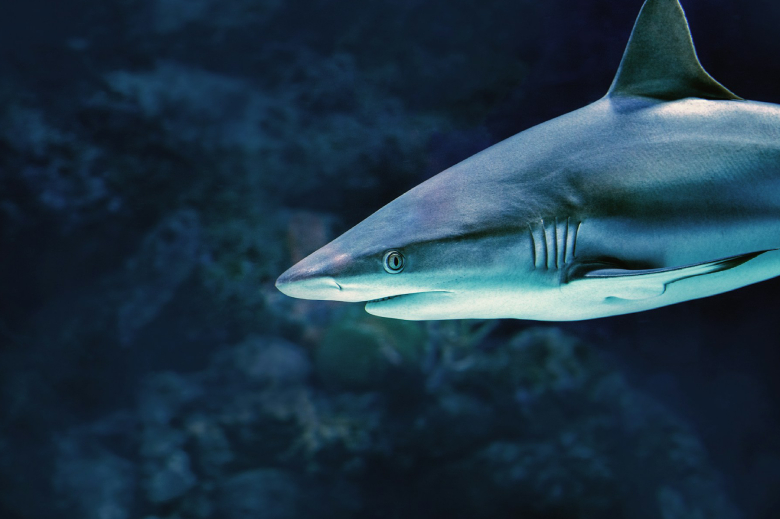
Sharks aren’t mindless monsters; they are the ocean’s premier research and development department. Having roamed the seas for over 400 million years—outlasting the dinosaurs, surviving four major extinction events, and refining their biology along the way—sharks are evolutionary masterpieces.
Today, engineers, material scientists, and medical researchers are looking directly at shark biology to build faster planes, design germ-free hospitals, and engineer next-generation renewable energy. Welcome to the fascinating world of shark-inspired biomimicry.
Dermal Denticles: The Secret to Frictionless Speed
Run your hand along a shark from head to tail, and it feels remarkably smooth. Brush the other way, and you’ll feel something akin to coarse sandpaper.
That rough texture comes from millions of microscopic, tooth-like scales called dermal denticles (literally "tiny skin teeth").
The Hydrodynamics: Instead of creating drag, these tiny riblets channel water over the shark's body, preventing turbulent eddies from forming against the skin.
The Olympic Swimsuit Controversy: In the early 2000s, swimwear designers engineered suits mimicking these denticle patterns. Swimmers wearing the shark-inspired suits smashed world records so rapidly that swimming authorities eventually banned the full-body suits to keep the sport fair.
Aviation & Wind Turbines: Aircraft manufacturers now apply micro-grooved coatings inspired by shark skin to airplane fuselages. By reducing drag during flight, planes consume significantly less jet fuel, cutting both airline costs and carbon emissions. Wind turbine blades coated in similar materials spin with less air resistance, generating more clean electricity.
The Anti-Bacterial Wonder: Keeping Surfaces Clean Without Chemicals
If you leave a boat hull in the ocean for a month, it gets encrusted with barnacles, algae, and slime. Yet sharks glide through the exact same water completely free of biofouling.
Scientists discovered that the microscopic ridges on shark skin are spaced so precisely that bacteria and algae spores simply cannot physically settle or form colonies on the surface.
Sharklet Technology: Medical device engineers replicated this microscopic pattern into a synthetic film called Sharklet.
Hospital Applications: When applied to high-touch hospital surfaces—door handles, tray tables, IV poles, and catheter tubes—it inhibits bacterial growth by up to 90% purely through physical geometry.
The Superbug Solution: Because this surface works mechanically rather than chemically, bacteria cannot develop resistance to it the way they do with overused antibiotics and chemical sanitizers.
The Sixth Sense: Navigating via Electric Fields
Sharks possess all our standard five senses, plus a built-in sensory superpower: electroreception.
Dotting the snout of a shark are hundreds of tiny, jelly-filled pores known as the Ampullae of Lorenzini.
Subtle Detection: These organs can detect the faint electrical pulses given off by the muscle contractions and heartbeats of living creatures hiding beneath the sand.
Earth’s Internal Compass: They also detect the Earth’s geomagnetic field lines, allowing sharks to navigate thousands of miles across featureless open ocean without getting lost.
Human Innovations: Engineers are studying these biological electro-sensors to develop ultra-sensitive underwater navigation tools for autonomous submersibles and underwater search-and-rescue robots where GPS signals cannot penetrate.
Reframing the Ocean’s Mastermind
Shark Biological Feature
Natural Function in the Wild
Human Innovation Inspired
Dermal Denticles
Low-drag turbulence reduction
Fuel-efficient aircraft skins & wind turbines
Skin Micro-Pattern
Anti-fouling & algae deterrence
Sterile hospital films & bacteria-resistant tools
Ampullae of Lorenzini
Electric field & heartbeat detection
Deep-sea geomagnetic navigation sensors
T-Cell Antibodies
Unique, hardy heavy-chain proteins
Targeted cancer & autoimmune drug therapies
Next time you spot a fin in coastal waters or visit an aquarium, look past the toothy grin. You’re looking at millions of years of cutting-edge mechanical engineering that is actively shaping our own future.
Taming the Tides — How to Read a Tide Chart Like a Master Mariner
There are two kinds of beach vacationers: those who understand tide charts, and those whose beach chairs, flip-flops, and paperback novels get swallowed by an incoming sea at 2:30 in the afternoon.
The ocean breathes in and out with clockwork precision, driven by the gravitational pull of the moon and the sun. Yet looking at a tide table for the first time can feel like trying to decipher a spreadsheet written in Morse code.
Understanding tide charts isn’t just about avoiding a soggy towel—it unlocks the secret schedule of the coast. Low tide reveals hidden sea caves, expansive sandbars, and vibrant tidal pools; high tide opens up calm bays for boating and brings deep-water fishing closer to the shore.
Here is your straightforward guide to cracking the nautical code.
The Cosmic Engine: Why Tides Happen
Before diving into the numbers, here is the quick, non-jargon physics behind the ocean’s rhythm:
The Lunar Tug-of-War: The moon’s gravity pulls ocean water toward it, creating a bulge of high tide on the side of the Earth facing the moon (and a corresponding bulge on the opposite side due to centrifugal force).
The 24-Hour, 50-Minute Cycle: Because the moon rotates around the Earth while the Earth spins, a lunar day lasts 24 hours and 50 minutes. That’s why high and low tides shift forward by roughly 50 minutes each day.
Semidiurnal vs. Diurnal Tides: Most Atlantic coasts experience semidiurnal tides (two roughly equal high tides and two low tides every 24 hours). Many parts of the Gulf of Mexico see diurnal tides (one high tide and one low tide per day), while the Pacific coast often features mixed tides (two highs and two lows of unequal height).
Anatomizing a Tide Chart: What the Columns Mean
When you look up a local tide table online or grab a printed card from a marina or bait shop, you’ll typically see four essential pieces of information:
Date/Day
Time
Tide Height
Type
Sat Aug 22
05:42 AM
+4.8 ft
HIGH
Sat Aug 22
11:58 AM
-0.3 ft
LOW
Sat Aug 22
06:15 PM
+5.1 ft
HIGH
Sat Aug 23
12:24 AM
+0.2 ft
LOW
Let’s decode what these values actually tell you:
Time: The exact moment the water reaches its absolute peak (High) or lowest valley (Low). Between these times, the water is continuously rising (flooding) or falling (ebbing).
Height (+ / - Feet): Tide height is measured against a baseline called the Chart Datum (usually "Mean Lower Low Water" or MLLW).
A height of +4.8 ft means the water will be 4.8 feet above that standard baseline.
A negative number (like -0.3 ft) indicates an unusually low tide that drops below the normal baseline—a golden opportunity for tide pooling and shelling!
The Secret "Rule of Twelves"
A common mistake is assuming water rises at a steady, linear rate between low and high tide.
It doesn’t. It accelerates and decelerates like a pendulum. Mariners calculate water movement using the Rule of Twelves over a standard six-hour tide cycle:
1st Hour: Water rises or falls by 1/12th of the total tidal range. (Very slow)
2nd Hour: Water moves by 2/12ths of the range.
3rd & 4th Hours: Water moves at maximum speed—3/12ths during the 3rd hour and 3/12ths during the 4th hour. Half the entire volume moves in this middle window!
5th Hour: Water slows down to 2/12ths.
6th Hour: Water eases to 1/12th before reaching slack water.
Why this matters to you: If you’re hiking across a sandbar or exploring a tidal cave, remember that the water rushes back in fastest during the middle two hours between low and high tide. Don’t wait until the last minute to turn around.
Spring Tides vs. Neap Tides
Every two weeks, the moon and sun align to create distinct tidal extremes:
Spring Tides (Full & New Moons): When the sun, moon, and Earth align in a straight line, their gravitational pulls combine. High tides are dramatically higher, and low tides are exceptionally low. (Note: This has nothing to do with the season of Spring; it comes from the German springen, meaning "to leap up").
Neap Tides (Quarter Moons): When the sun and moon sit at right angles to each other, their gravity partially cancels out. High tides are lower and low tides are higher, resulting in mild, calm water movement.
Best Practices for Your Beach Itinerary
For Beachcombing & Tidepools: Plan your arrival for 1 hour before absolute low tide. You’ll have optimal visibility, dry sand, and plenty of time to explore before the tide starts creeping back up.
For Paddleboarding & Boating: Check for slack tide (the 30-minute window around peak high or low tide when current flow pauses) to enjoy the calmest water.
For Setting Up Your Blanket: Look at the wet-sand line on the beach. If the sand is damp and dark where you’re laying your towel, high tide was recently there—and it will be back. Find dry, fluffy sand well above the high-water debris line to keep your gear bone-dry.
Decoding the Breeze — The Curious Traveler’s Guide to the Beaufort Scale
You’re standing on the deck of a ferry or walking along a coastal bluff. The breeze ruffles your hair, the surface of the bay shows a few white crests, and someone next to you says, "Looks like a solid Force 4 out there today."
Unless you grew up on a schooner, your first reaction might be: Force 4 of what? Are we being attacked by a weather wizard?
Enter the Beaufort Wind Force Scale—the oldest, most poetic, and surprisingly practical way sailors have measured wind for over two centuries. Long before digital anemometers and smartphone weather radars, mariners figured out that you don’t need high-tech sensors to understand the wind; you just need to look closely at what the water and the trees are doing.
Here is the story behind this nautical shorthand, and how you can use it on your next coastal getaway to read the weather like a 19th-century captain.
The Origin Story: Francis Beaufort’s Brilliant Observation
In 1805, Sir Francis Beaufort, an officer in the British Royal Navy, grew tired of the vague, subjective weather logs written by his fellow sailors. One captain’s "gentle breeze" was another captain's "annoying gale."
Beaufort devised a standardized scale from 0 to 12 based entirely on empirical observation:
No Instruments Required: Instead of trying to calculate exact numerical wind speeds in miles per hour, Beaufort categorized wind by its visible effect on a full-rigged man-of-war ship and the ocean surface.
Universal Standard: A Force 0 meant the sails hung limp like wet laundry. A Force 12 meant the ship was stripped down to bare poles, praying the mast wouldn’t snap.
From Sea to Shore: Later adapted for land observation, the scale became the global language of meteorology, allowing anyone to assess wind conditions simply by watching chimney smoke, leaf movement, or ocean swells.
The Cheat Sheet: 0 to 12 in Plain English
Here is how the scale breaks down for the everyday beachcomber, sailor, and coastal wanderer:
Force
Name
Wind Speed
Visual Clues (Land & Sea)
Coastal Activity Vibe
0
Calm
< 1 mph
Sea is a flat mirror; smoke rises vertically.
Glassy paddleboarding paradise.
1–2
Light Air / Light Breeze
1–7 mph
Wind vanes twitch; ripples form without foam crests.
Gentle sailing, easy kayaking.
3
Gentle Breeze
8–12 mph
Leaves and twigs rustle; scattered whitecaps appear.
Perfect day for a beach umbrella.
4
Moderate Breeze
13–18 mph
Dust raises; frequent whitecaps cover the waves.
Anchor your towel down with a cooler.
5
Fresh Breeze
19–24 mph
Small trees sway; moderate waves with white foam.
Advanced kiteboarders rejoice; casuals pack up.
6
Strong Breeze
25–31 mph
Large branches move; umbrellas turn inside out.
Great for watching waves from a safe pub window.
7–8
Near Gale / Gale
32–46 mph
Whole trees sway; sea heaps up with breaking foam.
Small craft advisories; stay off the water.
9–10
Strong Gale / Storm
47–63 mph
Slight structural damage; rolling, high waves.
Harbor lockdown; severe storm warnings.
11–12
Violent Storm / Hurricane
64+ mph
Widespread devastation; sea completely white with spray.
Mandatory evacuation territory.
How to Use the Scale on Your Next Trip
Knowing the Beaufort numbers turns casual people-watching into a fun tactical game:
The "Force 3" Beach Rule: Up to Force 3 (around 10–12 mph), your standard beach umbrella will stay put if properly anchored. Once you cross into Force 4 (13+ mph), unsecured umbrellas turn into rogue beach missiles.
Paddleboarders & Kayakers: Never launch an inflatable paddleboard in conditions exceeding Force 3. A sudden shift to Force 4 can generate enough surface chop and headwind to blow you offshore faster than you can paddle back.
Ferry Ride Comfort: If the forecast calls for Force 5 or higher, pack the motion-sickness tablets before stepping onto an open-water ferry crossing.
Mastering the Beaufort scale gives you an instant, intuitive feel for the elements—connecting you to centuries of maritime tradition with just a glance at the whitecaps.
There is a distinct aroma that defines the first 48 hours of every tropical vacation: a subtle blend of coconut suntan lotion, saltwater, and aloe vera gel being applied to aggressive, lobster-red sunburns.
We love the sun. It supplies vitamin D, melts away winter blues, and makes the ocean sparkle like crushed diamonds. But high ultraviolet (UV) indices and tropical ambient heat are stealthy adversaries. Before you lay out your towel under the golden rays, here is everything you need to stay cool, protected, and fully functional.
The Anatomy of Sun Damage: UVA vs. UVB
The sun beams down radiation in two primary spectrums that matter to your skin:
UVA Rays (Aging): These rays penetrate deep into the thickest layer of the skin (the dermis). They cause premature aging, wrinkles, and skin sagging, and they pass right through clouds and standard glass.
UVB Rays (Burning): These rays hit the superficial layers of your skin and are the direct cause of sunburns and DNA damage that leads to skin cancer.
Feature
UVA Rays
UVB Rays
Primary Effect
Deep tissue aging, fine lines, DNA damage
Surface sunburn, blistering, direct DNA damage
Cloud Penetration
Very high (cuts through cloud cover easily)
Moderate (partially filtered by dense clouds)
Intensity Peak
Constant throughout daylight hours
Peaks between 10:00 AM and 4:00 PM
Mastering the Sunscreen Equation
Grabbing whatever dusty bottle is rolling around the trunk of your car from three summers ago is not a viable strategy. Sunscreen science has come a long way—make sure you're using it correctly.
Look for "Broad Spectrum": This certification ensures the formula shields you against both UVA and UVB rays.
Pick the Right SPF: SPF 30 blocks roughly 97% of UVB rays; SPF 50 blocks about 98%. Anything above 50 offers negligible extra protection and often gives a false sense of security.
The Two-Finger Rule: For your face and neck alone, apply two full finger-lengths of lotion. For your full body, you need roughly a full shot glass (one ounce) of sunscreen.
The 2-Hour Timer: No sunscreen is truly waterproof; regulations now label them "water-resistant for 40 or 80 minutes." Regardless of the label, reapply every two hours, and immediately after toweling off.
Decoding Heat Illness: Exhaustion vs. Stroke
Heat illnesses exist on a spectrum. Catching the symptoms early keeps a mild case of the wobbles from turning into an emergency room visit.
Heat Exhaustion (Warning Signs)
Heavy, clammy sweating with cool, pale skin
Muscle cramps and headache
Dizziness, weakness, or feeling faint
Mild nausea
What to do: Move immediately to an air-conditioned room or deep shade, loosen tight clothing, apply cool, damp towels to the neck and armpits, and sip cool water.
Heat Stroke (Medical Emergency)
Core body temperature above 104°F (40°C)
Hot, red, dry skin (or sometimes damp from previous sweating, but sweating stops)
Confusion, slurred speech, or erratic behavior
Rapid pulse, vomiting, or loss of consciousness
What to do: Call local emergency services immediately. Get the person into shade, immerse them in cold water or pack ice around the neck, groin, and armpits while waiting for medical help.
The Hydration Reality Check
Sitting under an umbrella with an icy piña colada feels hydrating, but alcohol is a diuretic that accelerates fluid loss. The same goes for iced coffees and sugary sodas.
The 1:1 Rule: For every cocktail, beer, or caffeinated beverage you enjoy, drink one full glass of pure water.
Electrolytes Matter: When you sweat in heavy humidity, you lose sodium, potassium, and magnesium. Plain water alone won't replace them—pack electrolyte powders or drink fresh coconut water to keep cellular hydration balanced.
Check the Color: Your hydration indicator is simple: pale straw or clear urine means you're doing great; dark amber means you are already behind on water intake.
Gear That Does the Heavy Lifting
If you rely solely on lotion to protect you during an eight-hour beach day, you are fighting an uphill battle. Upgrade your beach kit with smart physical barriers:
UPF 50+ Sun Shirts / Rashguards: A regular white cotton t-shirt only offers about UPF 5 protection, which drops even lower when wet. Dedicated UPF swim shirts block 98% of rays effortlessly.
Wide-Brim Hats Over Baseball Caps: Baseball caps leave your ears, temples, and the back of your neck exposed to direct rays. Choose a wide-brimmed straw or canvas hat with at least a 3-inch brim.
UV400 Polarized Sunglasses: Your eyes can get sunburned too (photokeratitis). Look for lenses labeled UV400, which block 99-100% of UVA and UVB radiation, while polarization cuts the blinding surface glare from the water.
Treat the sun like a great travel companion: fantastic in measured doses, but best enjoyed with healthy boundaries, good hydration, and plenty of shade.