Taming the Tides — How to Read a Tide Chart Like a Master Mariner
There are two kinds of beach vacationers: those who understand tide charts, and those whose beach chairs, flip-flops, and paperback novels get swallowed by an incoming sea at 2:30 in the afternoon.
The ocean breathes in and out with clockwork precision, driven by the gravitational pull of the moon and the sun. Yet looking at a tide table for the first time can feel like trying to decipher a spreadsheet written in Morse code.
Understanding tide charts isn’t just about avoiding a soggy towel—it unlocks the secret schedule of the coast. Low tide reveals hidden sea caves, expansive sandbars, and vibrant tidal pools; high tide opens up calm bays for boating and brings deep-water fishing closer to the shore.
Here is your straightforward guide to cracking the nautical code.
The Cosmic Engine: Why Tides Happen
Before diving into the numbers, here is the quick, non-jargon physics behind the ocean’s rhythm:
- The Lunar Tug-of-War: The moon’s gravity pulls ocean water toward it, creating a bulge of high tide on the side of the Earth facing the moon (and a corresponding bulge on the opposite side due to centrifugal force).
- The 24-Hour, 50-Minute Cycle: Because the moon rotates around the Earth while the Earth spins, a lunar day lasts 24 hours and 50 minutes. That’s why high and low tides shift forward by roughly 50 minutes each day.
- Semidiurnal vs. Diurnal Tides: Most Atlantic coasts experience semidiurnal tides (two roughly equal high tides and two low tides every 24 hours). Many parts of the Gulf of Mexico see diurnal tides (one high tide and one low tide per day), while the Pacific coast often features mixed tides (two highs and two lows of unequal height).
Anatomizing a Tide Chart: What the Columns Mean
When you look up a local tide table online or grab a printed card from a marina or bait shop, you’ll typically see four essential pieces of information:
| Date/Day | Time | Tide Height | Type |
|---|---|---|---|
| Sat Aug 22 | 05:42 AM | +4.8 ft | HIGH |
| Sat Aug 22 | 11:58 AM | -0.3 ft | LOW |
| Sat Aug 22 | 06:15 PM | +5.1 ft | HIGH |
| Sat Aug 23 | 12:24 AM | +0.2 ft | LOW |
Let’s decode what these values actually tell you:
- Time: The exact moment the water reaches its absolute peak (High) or lowest valley (Low). Between these times, the water is continuously rising (flooding) or falling (ebbing).
- Height (+ / - Feet): Tide height is measured against a baseline called the Chart Datum (usually "Mean Lower Low Water" or MLLW).
- A height of +4.8 ft means the water will be 4.8 feet above that standard baseline.
- A negative number (like -0.3 ft) indicates an unusually low tide that drops below the normal baseline—a golden opportunity for tide pooling and shelling!
The Secret "Rule of Twelves"
A common mistake is assuming water rises at a steady, linear rate between low and high tide.
It doesn’t. It accelerates and decelerates like a pendulum. Mariners calculate water movement using the Rule of Twelves over a standard six-hour tide cycle:
- 1st Hour: Water rises or falls by 1/12th of the total tidal range. (Very slow)
- 2nd Hour: Water moves by 2/12ths of the range.
- 3rd & 4th Hours: Water moves at maximum speed—3/12ths during the 3rd hour and 3/12ths during the 4th hour. Half the entire volume moves in this middle window!
- 5th Hour: Water slows down to 2/12ths.
- 6th Hour: Water eases to 1/12th before reaching slack water.
Why this matters to you: If you’re hiking across a sandbar or exploring a tidal cave, remember that the water rushes back in fastest during the middle two hours between low and high tide. Don’t wait until the last minute to turn around.
Spring Tides vs. Neap Tides
Every two weeks, the moon and sun align to create distinct tidal extremes:
- Spring Tides (Full & New Moons): When the sun, moon, and Earth align in a straight line, their gravitational pulls combine. High tides are dramatically higher, and low tides are exceptionally low. (Note: This has nothing to do with the season of Spring; it comes from the German springen, meaning "to leap up").
- Neap Tides (Quarter Moons): When the sun and moon sit at right angles to each other, their gravity partially cancels out. High tides are lower and low tides are higher, resulting in mild, calm water movement.
Best Practices for Your Beach Itinerary
- For Beachcombing & Tidepools: Plan your arrival for 1 hour before absolute low tide. You’ll have optimal visibility, dry sand, and plenty of time to explore before the tide starts creeping back up.
- For Paddleboarding & Boating: Check for slack tide (the 30-minute window around peak high or low tide when current flow pauses) to enjoy the calmest water.
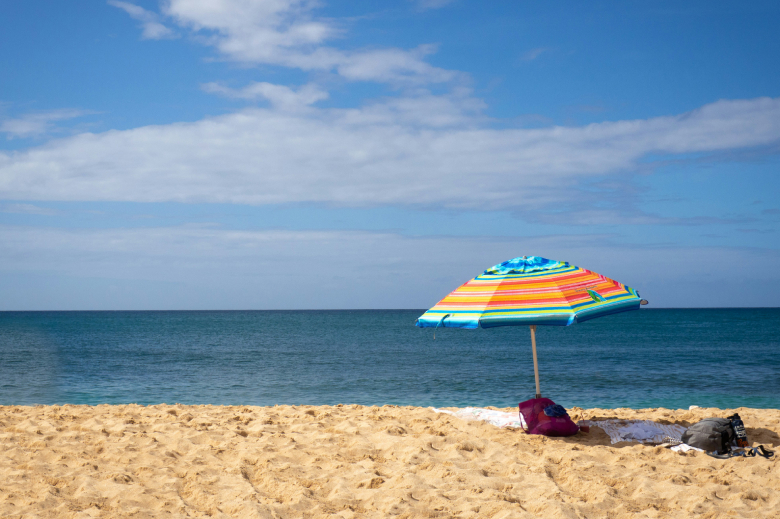
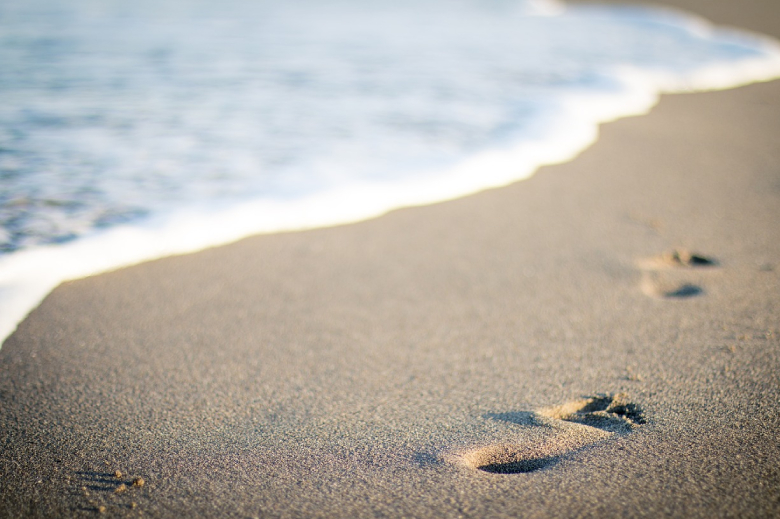
- For Setting Up Your Blanket: Look at the wet-sand line on the beach. If the sand is damp and dark where you’re laying your towel, high tide was recently there—and it will be back. Find dry, fluffy sand well above the high-water debris line to keep your gear bone-dry.