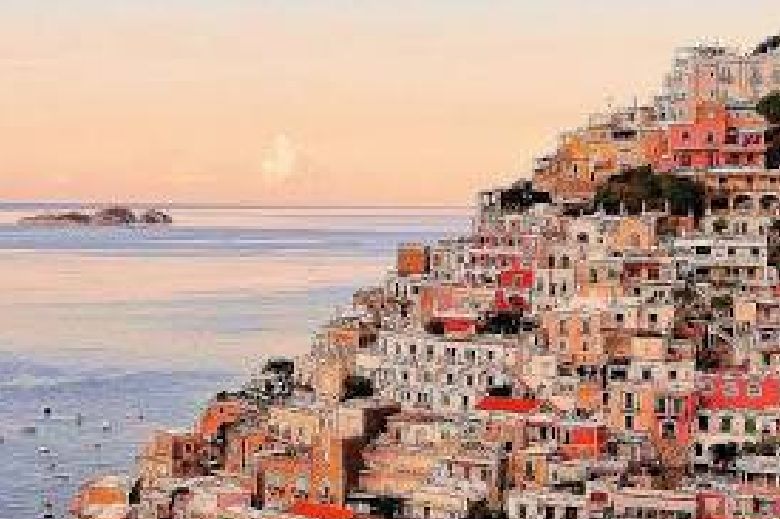
The Ultimate Guide to Positano: The Vertical Jewel of the Amalfi Coast
When you envision the Amalfi Coast, you are almost certainly picturing Positano. Tumbling down a near-vertical cliff face in a cascade of peach, pink, and terracotta houses, this historic fishing village is the undisputed glamour capital of southern Italy. It is a destination that demands a little physical effort—there are stairs everywhere—but rewards you with some of the most spectacular, cinematic coastal views on earth.
Welcome to the ultimate travel guide to Positano, Italy. Whether you want to hike ancient mountain trails, sip an Aperol Spritz on a sun-drenched terrace, or charter a boat across the deep blue Tyrrhenian Sea, this comprehensive guide covers everything you need to know to experience La Dolce Vita.Why It’s Worth Knowing About
Long before it was a playground for Hollywood elite and luxury travelers, Positano was an important maritime port of the Amalfi Republic in the Middle Ages. Its modern fame, however, can largely be traced back to 1953, when the author John Steinbeck published an essay in Harper's Bazaar famously writing: "Positano bites deep. It is a dream place that isn’t quite real when you are there and becomes beckoningly real after you have gone."
The sheer geography of Positano is staggering. There are very few traditional streets here; instead, the town is woven together by steep, narrow staircases and winding pedestrian pathways draped in vibrant bougainvillea and lemon vines.
Beyond its visual appeal, Positano is worth knowing about because it acts as the perfect strategic hub for exploring the broader Amalfi Coast. It sits perfectly positioned between the bustling town of Sorrento and the historic city of Amalfi, offering direct ferry access to the legendary island of Capri. Yet, despite its massive global fame and the bustling crowds, the town has managed to retain an undeniable, timeless Italian romance that continues to captivate visitors from around the globe.
Water Data: Temperature & Clarity
Positano sits on the Tyrrhenian Sea, a part of the Mediterranean. Because the beaches here are composed of dark grey pebbles rather than fine white sand, the water behaves slightly differently than it does in sandy Caribbean or Floridian destinations.
Water Temperatures by Season
The Mediterranean experiences distinct seasons. If swimming is your priority, timing is everything. Here is what to expect based on seasonal averages:
| Season | Avg. Water Temp | How it Feels |
| Winter (Dec - Feb) | 57°F - 61°F (14°C - 16°C) | Very cold. Locals stay out of the water, and most beach clubs are entirely closed. |
| Spring (Mar - May) | 60°F - 68°F (15°C - 20°C) | Brisk. By late May, brave souls will swim, but it is still quite refreshing. |
| Summer (Jun - Aug) | 75°F - 81°F (24°C - 27°C) | Perfect. The water is delightfully warm, providing essential relief from the intense summer sun. |
| Fall (Sep - Nov) | 68°F - 77°F (20°C - 25°C) | September water is fantastic. By late October, the sea cools rapidly back into the 60s. |
Water Clarity
The clarity in Positano is generally excellent. Because the shoreline is rocky and pebbly, there is virtually no sand to churn up in the surf. This results in a deep, striking sapphire-blue water that remains translucent even in deeper sections. The clarity is best in the morning before the heavy boat traffic begins to stir up the bay.
Marine Life
While it may not boast the tropical coral reefs of the South Pacific, the rocky coastal shelf of the Amalfi Coast supports a rugged and fascinating Mediterranean marine ecosystem.
Octopus and Moray Eels
The underwater landscape off the Amalfi Coast is highly jagged, full of grottos, caves, and limestone boulders. This provides a perfect habitat for the common octopus, which local fishermen frequently catch (and which features heavily on local menus). If you are snorkeling near the rocks of Spiaggia di Fornillo, you might also spot the Mediterranean moray eel peering out from the crevices.
Sea Urchins
If you swim near the rocky cliffs, you will quickly notice clusters of black and purple sea urchins clinging to the stone. While they are a sign of clean, healthy water, they are also a reason why packing water shoes is highly recommended when visiting Positano!
Pelagic Fish and Dolphins
Further offshore, the deep waters of the Tyrrhenian Sea are home to schools of amberjack, bluefin tuna, and swordfish. While you won't see these from the beach, booking a boat charter to Capri will occasionally reward you with sightings of striped or bottlenose dolphins playing in the boat's wake.
Best Time to Go
The Amalfi Coast is highly seasonal. Choosing the right time to visit dictates your entire experience, from the size of your budget to whether the restaurants are even open.
- The Sweet Spots (May & September): These are unequivocally the best months to visit. In May, the town smells like lemon blossoms and the crowds are manageable. In September, the water is still warm from the summer sun, but the suffocating August crowds begin to thin out. Expect highs in the 70s to low 80s (24°C - 28°C).
- Peak Summer (July to August): This is when Positano is at its most frantic, crowded, and expensive. The weather is hot (frequently topping 85°F/30°C) and humid, and traffic on the coastal road is heavy. However, if you want the classic, high-energy beach club vibe and vibrant nightlife, this is when the town is fully alive.
- The Hiking Months (April & October): If you care less about swimming and more about hiking and photography, April and October are beautiful. The air is crisp, the skies are generally clear, and accommodation prices drop significantly.
- The Dead of Winter (November to March): Avoid visiting during this time unless you purely want isolation. Positano essentially shuts down. Ferries stop running, beach clubs are dismantled, and roughly 60% to 80% of the hotels and restaurants close for the season.
Getting There, Getting Around, & Where to Stay
Getting There
Getting to Positano requires a bit of logistical maneuvering, but the journey is stunning.
- Fly: You will fly into Naples International Airport (NAP) or take a high-speed train from Rome to Naples Centrale.
- The Train: From Naples, take the Circumvesuviana commuter train (or the slightly nicer Campania Express) south to Sorrento.
- The Final Leg: From Sorrento, you can take a SITA public bus, a private taxi, or a ferry to Positano. The Ferry is highly recommended—arriving in Positano by water is an unforgettable visual experience and spares you the winding, stomach-churning curves of the coastal highway.
Getting Around
- Walking (and Climbing): Positano is explored on foot. Be prepared for hundreds of steep stairs. Comfortable walking shoes are not a suggestion; they are a requirement.
- Ferries: To visit neighboring towns like Amalfi or Ravello, or the island of Capri, the ferry is the most scenic and efficient transport.
- SITA Bus: The public buses run along the coast, but they get incredibly crowded in the summer.
- Avoid Driving: Do not rent a car unless you are highly experienced with narrow, cliffside Italian driving and are prepared to pay exorbitant daily parking fees. The SS163 highway is notoriously narrow and congested.
Where to Stay
Positano is vertical, meaning you trade convenience for views depending on where you book:
- Lower Positano (Near the Beach): Staying near Spiaggia Grande means you have zero stairs to climb after dinner, and you are steps away from the ferries and main shops. The trade-off is that it is the most expensive and noisy area, and you miss out on the panoramic birds-eye views.
- Upper Positano (Chiesa Nuova / Montepertuso): High up the cliffside, you get spectacular, sweeping views of the entire coastline and more affordable hotel rates. The downside? You will rely heavily on the local internal bus loop or face a massive stair climb to get home from the beach.
- Fornillo: Located just a 10-minute walk west of the main center, this neighborhood overlooks Fornillo Beach. It is quieter, slightly less expensive, and offers a much more relaxed, intimate vibe while still being incredibly close to the action.
Things To Do
Positano is about indulging the senses. Your itinerary should blend physical exploration with long, unapologetically lazy afternoons.
Relax on Spiaggia Grande
This is the main beach and the social epicenter of Positano.
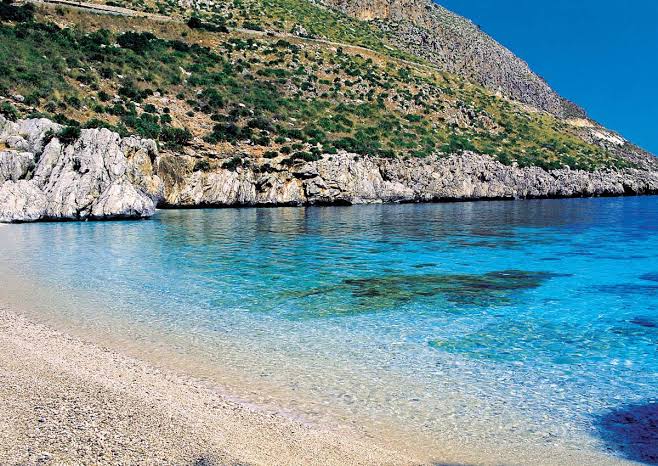
The vibrant, pebbled shores of Spiaggia Grande. Source: Trovaspiagge
Lined with perfectly aligned, brightly colored sunbeds and umbrellas, it is the place to see and be seen. Rent a lounger for the day (book well in advance during peak season), order a drink, and enjoy the dramatic views of the town rising up the cliff behind you. For a slightly quieter day, walk the coastal path over to the neighboring Fornillo Beach.
Hike the Path of the Gods (Il Sentiero degli Dei)
If you do one active thing on the Amalfi Coast, make it this hike.
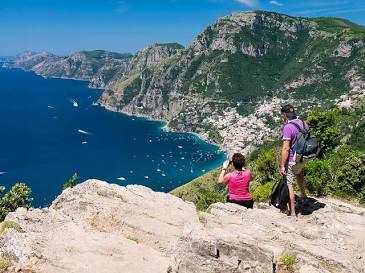
The breathtaking Path of the Gods trail. Source: Positano.com
Suspended high above the coastline, this ancient mule trail stretches roughly 4 miles (6.5 km) from the town of Bomerano down to Nocelle (a village situated high above Positano). The hike takes about 3 to 4 hours and offers vertigo-inducing, god-like views of the entire Amalfi Coast and the island of Capri in the distance.
Take a Boat Tour to Capri
Chartering a traditional wooden gozzo boat for a day trip to Capri is a classic Amalfi experience. You will cruise past the towering Faraglioni rock formations, have the chance to swim in secluded coves, and can stop to explore the glamorous island boutiques or the famous Blue Grotto.
Shop for Handmade Sandals and Linen
Positano has a distinct, breezy fashion sense known as Moda Positano. The narrow pedestrian streets are lined with boutiques selling tailored white linen clothing, vibrant ceramics, and custom leather sandals. You can walk into a cobbler's shop, choose your straps and jewels, and have a pair of bespoke sandals fitted to your feet in under an hour.
Watch the Sunset at a Cliffside Bar
As the sun dips below the horizon, Positano truly sparkles.
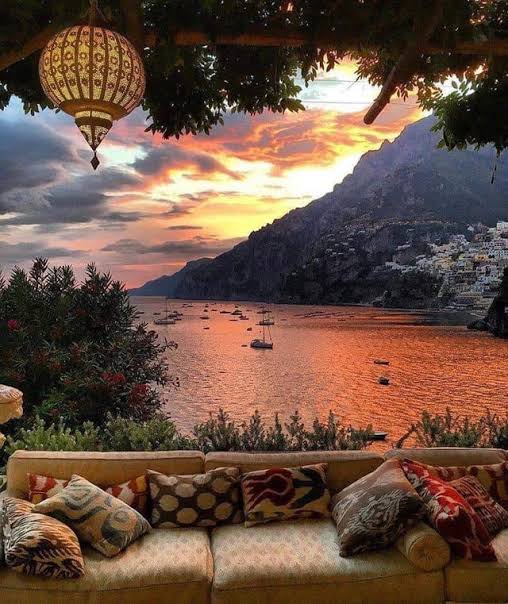
Dusk falls over the vertical city of Positano. Source: Reddit
Head to one of the famous luxury hotels, such as Le Sirenuse (at Franco's Bar) or Il San Pietro di Positano. While the cocktails come with a premium price tag, sitting on a terrace draped in vines, listening to the ambient hum of the town below, and watching the pastel houses glow in the twilight is an experience you will never forget.