The Cosmic Tug-of-War — The Surprising Physics That Drive Ocean Tides
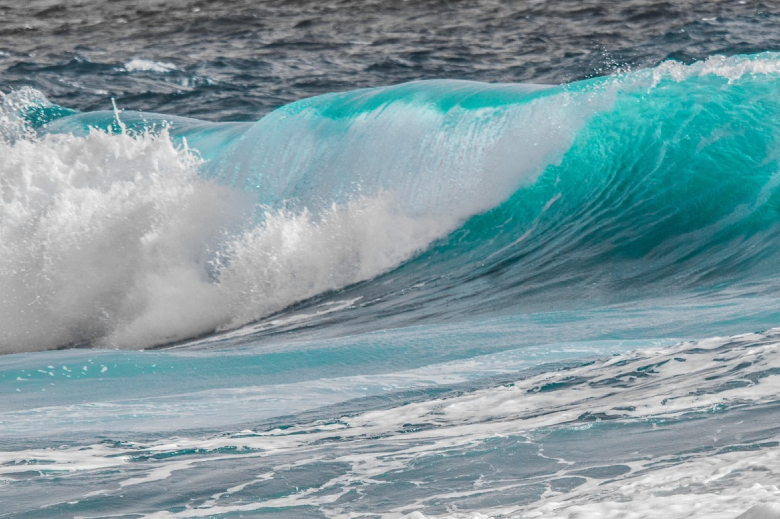
Twice a day, billions of tons of seawater rhythmically rise up against the shore, submerge beaches, and retreat back into the deep.
We take this celestial dance for granted. We track it to park our beach towels and launch our paddleboards but pause for a moment to consider the sheer scale of what is happening: the oceans are being physically stretched and pulled across the surface of our planet by cosmic gravitational forces hundreds of thousands of miles away.
Tides are not random waves. They are planetary-scale kinetic energy at work.
Here is the surprisingly weird, elegant physics behind what makes the ocean rise and fall—and why there is always a second high tide on the exact opposite side of the world.
The Moon, the Bulge, and the "Opposite Side" Mystery
Most people know the moon’s gravity pulls the ocean toward it, creating a high-tide bulge on the side of the Earth facing the moon.
The real brain-teaser is this: Why is there a simultaneous high tide on the other side of the Earth, facing completely away from the moon?
The answer lies in the difference between gravity and inertia:
- The Moon-Facing Side: The moon's gravitational pull is strongest here because it is closest. It pulls the water toward itself, creating Bulge 1 (the near-side high tide).
- The Center of the Earth: The Earth itself feels an average gravitational pull and gets tugged slightly toward the moon.
- The Far Side: The ocean water on the far side is furthest from the moon, feeling the weakest gravitational pull. Because the Earth is spinning around a shared center of mass (the barycenter), inertia and centrifugal force fling that distant water outward, creating Bulge 2 (the far-side high tide).
As the Earth spins on its axis every 24 hours, your local beach rotates through these two bulges, giving you two high tides and two low tides each day.
The Solar Tag-Team: Springs and Neaps
The moon is the primary conductor of the tides because it is close, but the sun is a massive, heavyweight player.
Even though the sun is 400 times further away, its sheer mass gives it roughly 44% of the moon’s tide-generating power. Depending on where the sun and moon sit relative to one another, they either team up or fight each other.
- Spring Tides (The Amplified Tides):
- When: During the Full Moon and New Moon.
- The Alignment: The Earth, Moon, and Sun sit in a straight line (known as syzygy).
- The Effect: Their gravitational pulls combine into a powerhouse force. High tides hit extreme peaks, low tides drop to historic lows, and tidal currents move at maximum velocity.
- Neap Tides (The Mellow Tides):
- When: During the First Quarter and Third Quarter moons.
- The Alignment: The Sun and Moon sit at a 90-degree right angle relative to Earth.
- The Effect: The sun’s gravity partially cancels out the moon’s pull. High tides are unusually modest, low tides are relatively shallow, and the water stays calm and tame.
Why Aren't Tides the Same Everywhere?
If the moon's gravity were the only factor, every coastline on Earth would have an identical 3-foot tide twice a day.
In reality, tidal ranges vary wildly depending on coastal geography and ocean basin geometry:
- The Funnel Effect (Bay of Fundy, Canada): The Bay of Fundy boasts the highest tidal range on the planet—a staggering 53 feet between high and low tide. The bay’s V-shape and natural underwater depth funnel incoming water like a giant sloshing bathtub that resonates in perfect harmony with the ocean's tidal frequency.
- The Mediterranean Enigma: The Mediterranean Sea has an average tidal range of less than a single foot. Because it connects to the Atlantic through the narrow Strait of Gibraltar, water cannot enter and exit fast enough to create large tidal swings before the cycle reverses.
- Tidal Bores (Rivers That Flow Backward): When powerful incoming ocean tides force their way into narrow river estuaries (like the Amazon River in Brazil or the River Severn in the UK), they form a continuous, standing wave that travels miles upriver against the natural flow of the current.
The Global Energy Machine
Beyond dictating your beach setup, tides are vital to the health of the planet:
- Circulating Nutrients: Tides pump oxygen-rich surface water into coastal marshes and dredge nutrient-dense sediment out into open water, feeding microscopic phytoplankton at the base of the food chain.
- Renewable Energy: Because tides are 100% predictable centuries in advance (unlike wind or sun), underwater tidal stream turbines generate steady, reliable zero-emission electricity for coastal electrical grids.
Every wave that rolls across the sand is a handshake between our oceans and the cosmos. Understanding the science turns every high tide into a front-row seat to the clockwork of the solar system.