How to Survive Tropical Days Without Frying
There is a distinct aroma that defines the first 48 hours of every tropical vacation: a subtle blend of coconut suntan lotion, saltwater, and aloe vera gel being applied to aggressive, lobster-red sunburns.
We love the sun. It supplies vitamin D, melts away winter blues, and makes the ocean sparkle like crushed diamonds. But high ultraviolet (UV) indices and tropical ambient heat are stealthy adversaries. Before you lay out your towel under the golden rays, here is everything you need to stay cool, protected, and fully functional.
The Anatomy of Sun Damage: UVA vs. UVB
The sun beams down radiation in two primary spectrums that matter to your skin:
- UVA Rays (Aging): These rays penetrate deep into the thickest layer of the skin (the dermis). They cause premature aging, wrinkles, and skin sagging, and they pass right through clouds and standard glass.
- UVB Rays (Burning): These rays hit the superficial layers of your skin and are the direct cause of sunburns and DNA damage that leads to skin cancer.
| Feature | UVA Rays | UVB Rays |
| Primary Effect | Deep tissue aging, fine lines, DNA damage | Surface sunburn, blistering, direct DNA damage |
| Cloud Penetration | Very high (cuts through cloud cover easily) | Moderate (partially filtered by dense clouds) |
| Intensity Peak | Constant throughout daylight hours | Peaks between 10:00 AM and 4:00 PM |
Mastering the Sunscreen Equation
Grabbing whatever dusty bottle is rolling around the trunk of your car from three summers ago is not a viable strategy. Sunscreen science has come a long way—make sure you're using it correctly.
- Look for "Broad Spectrum": This certification ensures the formula shields you against both UVA and UVB rays.
- Pick the Right SPF: SPF 30 blocks roughly 97% of UVB rays; SPF 50 blocks about 98%. Anything above 50 offers negligible extra protection and often gives a false sense of security.
- The Two-Finger Rule: For your face and neck alone, apply two full finger-lengths of lotion. For your full body, you need roughly a full shot glass (one ounce) of sunscreen.
- The 2-Hour Timer: No sunscreen is truly waterproof; regulations now label them "water-resistant for 40 or 80 minutes." Regardless of the label, reapply every two hours, and immediately after toweling off.
Decoding Heat Illness: Exhaustion vs. Stroke
Heat illnesses exist on a spectrum. Catching the symptoms early keeps a mild case of the wobbles from turning into an emergency room visit.
Heat Exhaustion (Warning Signs)
- Heavy, clammy sweating with cool, pale skin
- Muscle cramps and headache
- Dizziness, weakness, or feeling faint
- Mild nausea
What to do: Move immediately to an air-conditioned room or deep shade, loosen tight clothing, apply cool, damp towels to the neck and armpits, and sip cool water.
Heat Stroke (Medical Emergency)
- Core body temperature above 104°F (40°C)
- Hot, red, dry skin (or sometimes damp from previous sweating, but sweating stops)
- Confusion, slurred speech, or erratic behavior
- Rapid pulse, vomiting, or loss of consciousness
What to do: Call local emergency services immediately. Get the person into shade, immerse them in cold water or pack ice around the neck, groin, and armpits while waiting for medical help.
The Hydration Reality Check
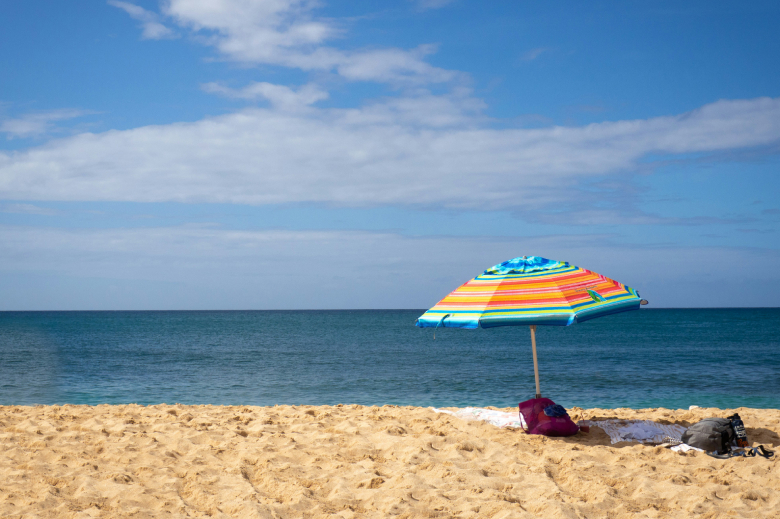
Sitting under an umbrella with an icy piña colada feels hydrating, but alcohol is a diuretic that accelerates fluid loss. The same goes for iced coffees and sugary sodas.
- The 1:1 Rule: For every cocktail, beer, or caffeinated beverage you enjoy, drink one full glass of pure water.
- Electrolytes Matter: When you sweat in heavy humidity, you lose sodium, potassium, and magnesium. Plain water alone won't replace them—pack electrolyte powders or drink fresh coconut water to keep cellular hydration balanced.
- Check the Color: Your hydration indicator is simple: pale straw or clear urine means you're doing great; dark amber means you are already behind on water intake.
Gear That Does the Heavy Lifting
If you rely solely on lotion to protect you during an eight-hour beach day, you are fighting an uphill battle. Upgrade your beach kit with smart physical barriers:
- UPF 50+ Sun Shirts / Rashguards: A regular white cotton t-shirt only offers about UPF 5 protection, which drops even lower when wet. Dedicated UPF swim shirts block 98% of rays effortlessly.
- Wide-Brim Hats Over Baseball Caps: Baseball caps leave your ears, temples, and the back of your neck exposed to direct rays. Choose a wide-brimmed straw or canvas hat with at least a 3-inch brim.
- UV400 Polarized Sunglasses: Your eyes can get sunburned too (photokeratitis). Look for lenses labeled UV400, which block 99-100% of UVA and UVB radiation, while polarization cuts the blinding surface glare from the water.
Treat the sun like a great travel companion: fantastic in measured doses, but best enjoyed with healthy boundaries, good hydration, and plenty of shade.