Nature’s Sharpest Engineers — How Sharks Are Quietly Revolutionizing Human Tech
Pop culture has spent decades painting sharks as ruthless, razor-toothed villains lurking beneath the waves with an ominous two-note soundtrack.
Humanity has completely misread the room.
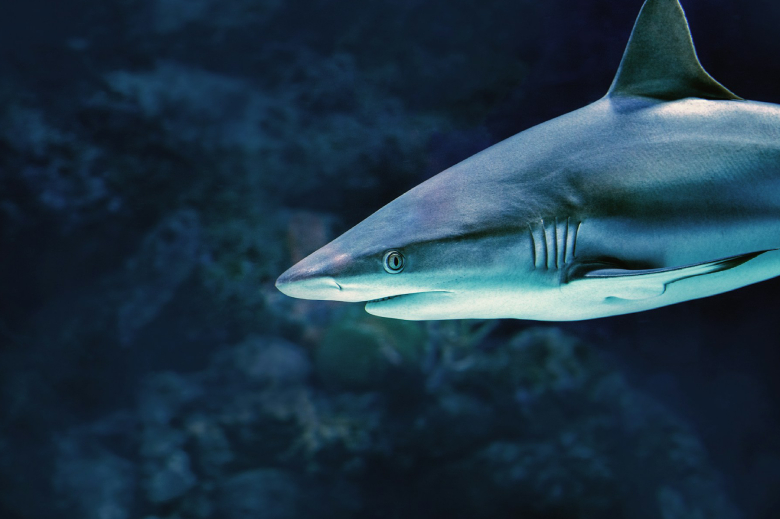
Sharks aren’t mindless monsters; they are the ocean’s premier research and development department. Having roamed the seas for over 400 million years—outlasting the dinosaurs, surviving four major extinction events, and refining their biology along the way—sharks are evolutionary masterpieces.
Today, engineers, material scientists, and medical researchers are looking directly at shark biology to build faster planes, design germ-free hospitals, and engineer next-generation renewable energy. Welcome to the fascinating world of shark-inspired biomimicry.
Dermal Denticles: The Secret to Frictionless Speed
Run your hand along a shark from head to tail, and it feels remarkably smooth. Brush the other way, and you’ll feel something akin to coarse sandpaper.
That rough texture comes from millions of microscopic, tooth-like scales called dermal denticles (literally "tiny skin teeth").
- The Hydrodynamics: Instead of creating drag, these tiny riblets channel water over the shark's body, preventing turbulent eddies from forming against the skin.
- The Olympic Swimsuit Controversy: In the early 2000s, swimwear designers engineered suits mimicking these denticle patterns. Swimmers wearing the shark-inspired suits smashed world records so rapidly that swimming authorities eventually banned the full-body suits to keep the sport fair.
- Aviation & Wind Turbines: Aircraft manufacturers now apply micro-grooved coatings inspired by shark skin to airplane fuselages. By reducing drag during flight, planes consume significantly less jet fuel, cutting both airline costs and carbon emissions. Wind turbine blades coated in similar materials spin with less air resistance, generating more clean electricity.
The Anti-Bacterial Wonder: Keeping Surfaces Clean Without Chemicals
If you leave a boat hull in the ocean for a month, it gets encrusted with barnacles, algae, and slime. Yet sharks glide through the exact same water completely free of biofouling.
Scientists discovered that the microscopic ridges on shark skin are spaced so precisely that bacteria and algae spores simply cannot physically settle or form colonies on the surface.
- Sharklet Technology: Medical device engineers replicated this microscopic pattern into a synthetic film called Sharklet.
- Hospital Applications: When applied to high-touch hospital surfaces—door handles, tray tables, IV poles, and catheter tubes—it inhibits bacterial growth by up to 90% purely through physical geometry.
- The Superbug Solution: Because this surface works mechanically rather than chemically, bacteria cannot develop resistance to it the way they do with overused antibiotics and chemical sanitizers.
The Sixth Sense: Navigating via Electric Fields
Sharks possess all our standard five senses, plus a built-in sensory superpower: electroreception.
Dotting the snout of a shark are hundreds of tiny, jelly-filled pores known as the Ampullae of Lorenzini.
- Subtle Detection: These organs can detect the faint electrical pulses given off by the muscle contractions and heartbeats of living creatures hiding beneath the sand.
- Earth’s Internal Compass: They also detect the Earth’s geomagnetic field lines, allowing sharks to navigate thousands of miles across featureless open ocean without getting lost.
- Human Innovations: Engineers are studying these biological electro-sensors to develop ultra-sensitive underwater navigation tools for autonomous submersibles and underwater search-and-rescue robots where GPS signals cannot penetrate.
Reframing the Ocean’s Mastermind
| Shark Biological Feature | Natural Function in the Wild | Human Innovation Inspired |
| Dermal Denticles | Low-drag turbulence reduction | Fuel-efficient aircraft skins & wind turbines |
| Skin Micro-Pattern | Anti-fouling & algae deterrence | Sterile hospital films & bacteria-resistant tools |
| Ampullae of Lorenzini | Electric field & heartbeat detection | Deep-sea geomagnetic navigation sensors |
| T-Cell Antibodies | Unique, hardy heavy-chain proteins | Targeted cancer & autoimmune drug therapies |
Next time you spot a fin in coastal waters or visit an aquarium, look past the toothy grin. You’re looking at millions of years of cutting-edge mechanical engineering that is actively shaping our own future.